


The Mag 7 just crossed $25 trillion
Money is concentrating in large cap leaders
We’re already positioned.. and hunting for the next trade
Yesterday was an interesting day to be watching technology stocks.
The semiconductor trade was getting hammered. Memory stocks were falling apart. Traders continue to question whether the AI boom had finally gone too far.
Meanwhile, the Magnificent Seven collectively crossed $25 trillion in market capitalization for the first time.
Think about that. Seriously.
One of the market’s hottest trades was getting crushed, yet the biggest companies in America were still attracting buyers.
That’s not a contradiction skimming over. That’s leadership screaming at you in the face.
And it’s exactly what we’ve been watching.
Money Follows Strength
A few weeks ago, I wrote about the Mag 7 reclaiming leadership.
The group was breaking higher in absolute terms and beginning to outperform the broader market again.
My argument was simple: these companies have enough weight to carry the next leg of the bull market, even if everything else isn’t participating.
Now we’re getting more evidence.
In yesterday’s Daily Print, Randy showed how dramatically market leadership has changed since September.
For much of 2026, large cap growth was lagging smaller companies. Following September’s Fed meeting, that relationship began reversing.
Large cap growth moved higher while mid and small cap growth continued struggling.
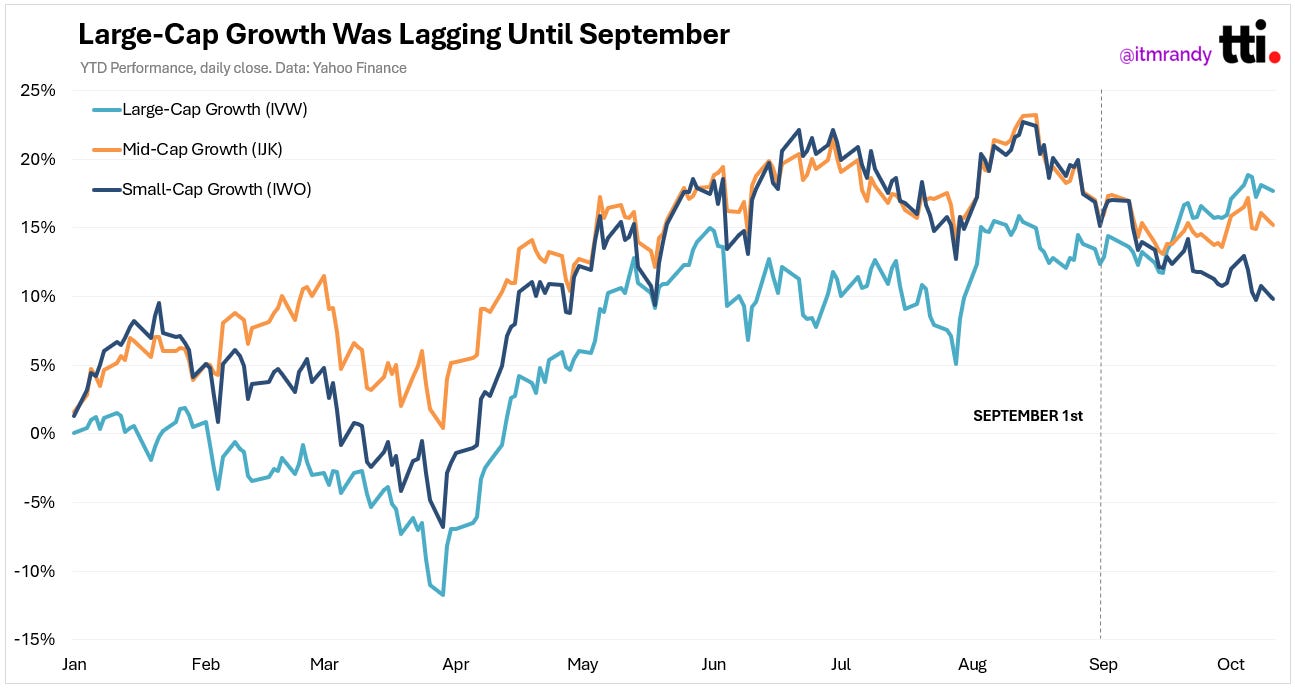
That tells us where leadership is developing.
But I want to know something else.
Is money actually following it?
Our ETF data says yes.
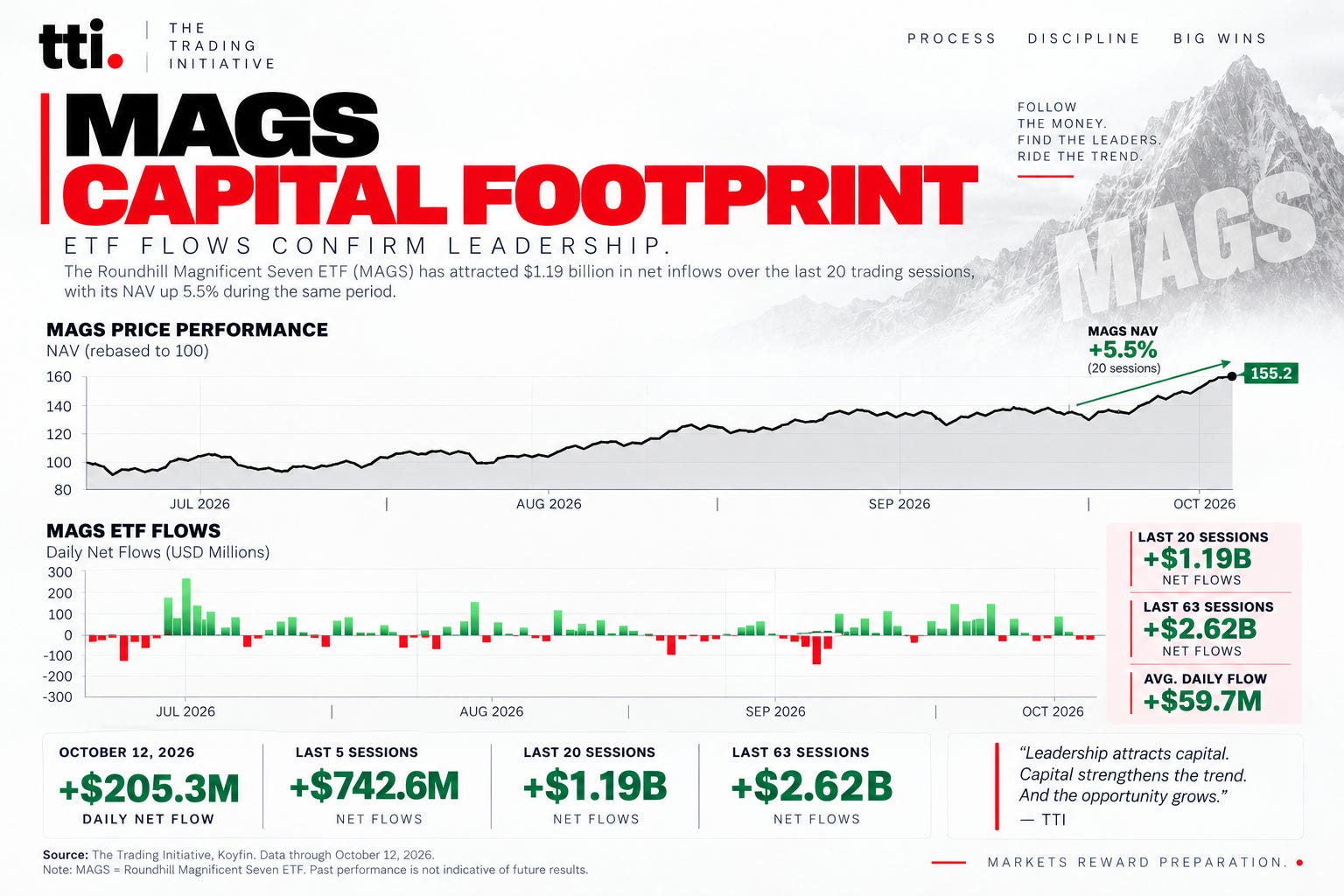
Over the 20 sessions ending October 12, the Roundhill Magnificent Seven ETF (MAGS) attracted approximately $1.19 billion in net inflows.
Its NAV increased approximately 5.5% over the comparable period.
Meanwhile, SMH - the semiconductor ETF - experienced approximately $832 million in net outflows over its latest 20 sessions.
Those are flows into and out of two specific ETFs, not a complete accounting of institutional positions. But the contrast is worth watching.
Money has been entering the Mag-7 vehicle while leaving the broader semiconductor vehicle.
Want research like this in your inbox?
Follow the money, find the leaders, and see what I’m watching each morning.
This is what I mean by following the capital footprint.
Price is strengthening. Relative leadership is improving. ETF money is moving in.
Wall Street doesn’t have to tell us where it’s putting money.
The footprint is right there.
Get In Before Everyone Says It’s “Safe”
This is why identifying leadership early matters so much.
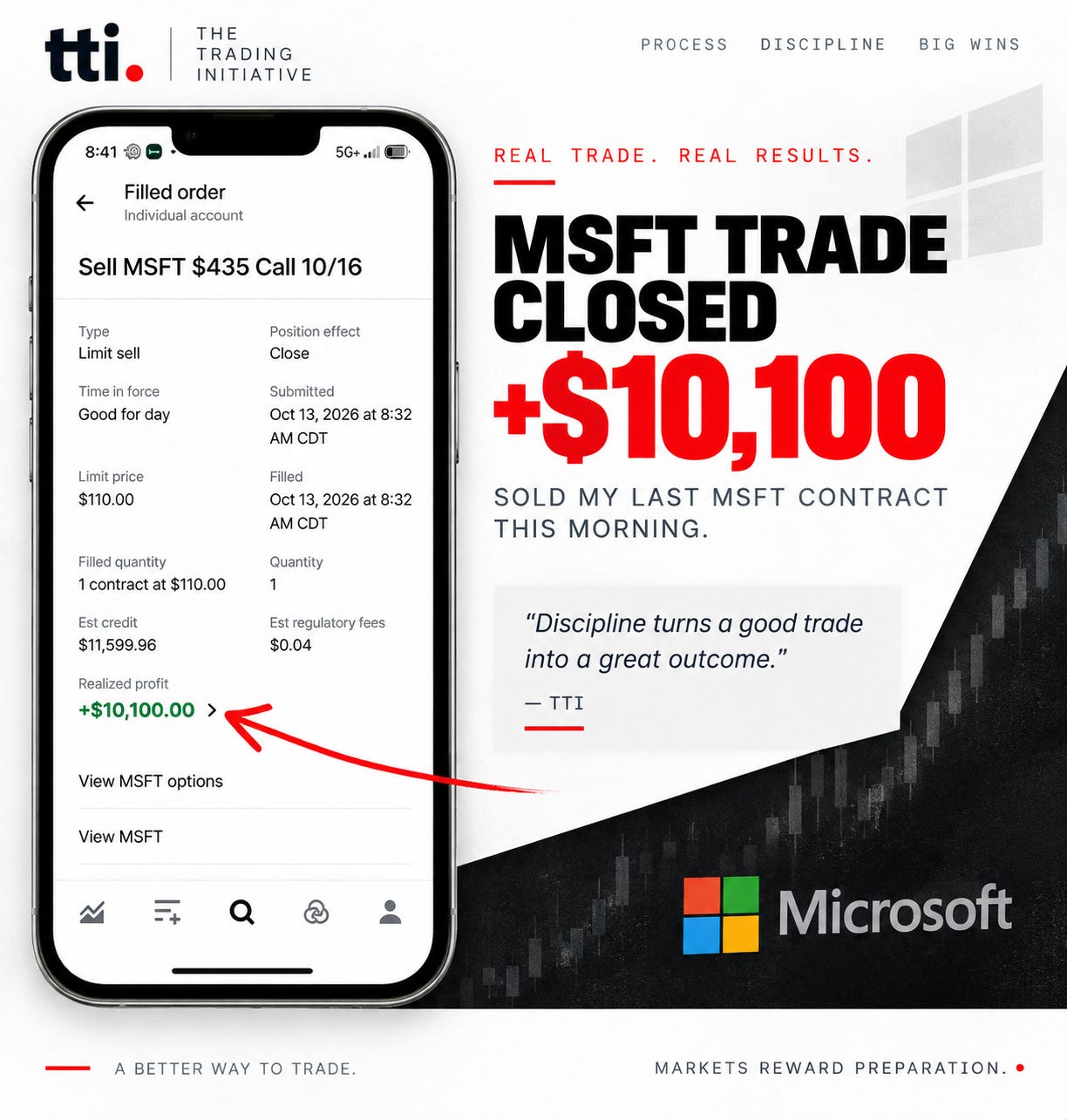
We’re already long Microsoft and Meta, and both positions have been working very well for us.
We didn’t arrive at those trades because somebody convinced us that AI would change the world.
We found an area of the market regaining leadership, then identified individual stocks offering attractive opportunities.
That’s the difference between having an interesting market opinion and having a trading process.
Our Market Blueprint tells us where we should be concentrating our attention.
Our Hit List helps us identify the strongest stocks within those areas using trend, relative strength and momentum.
Then we wait for a setup where the potential reward justifies the risk.
The Mag 7 was the opportunity. Microsoft and Meta were two ways we chose to participate.
And we’re not finished looking.
Now I’m Looking at Google
GOOG is the next name I’m working through.
That doesn’t mean I’m buying it today.
It means the broader leadership picture has earned it a place on my desk.
Now I want the individual stock to give me an entry, a clear level where the trade would be wrong, and enough potential upside to make taking that risk worthwhile.
It’s the same process we used to identify Microsoft and Meta.
And it’s the same process we’ll use when the memory trade eventually starts recovering.
Because markets don’t move in perfect unison.
Some stocks lead. Others lag. And leadership changes as capital moves from one opportunity to another.
Our job isn’t to own everything that’s going up.
It’s to find the strongest opportunities, enter when the risk makes sense, and stay with the winners as long as the evidence supports them.
The Mag 7 are reminding us why that matters.
While everyone debates whether AI is a bubble, whether technology is too expensive, or whether the next correction is coming, we’re focused on something much simpler.
Where is the money going, and which stocks are benefiting?
Right now, the trail still leads toward America’s largest growth companies.
We’re already participating.
And we’re looking for the next opportunity.
Follow the money. Find the leaders. Ride the trend.
— Hamilton
Founder, The Trading Initiative
P.S. — Finding market leadership is only half the battle. Inside Hamilton’s Wall Street Edge, you can follow the stocks I’m actually trading, the opportunities I’m watching next, and how I manage positions as they develop.
Flows chasing the leaders is also how concentration compounds. J.P. Morgan's Michael Cembalest finds 42 AI-linked stocks drove roughly 67% of S&P 500 price returns since January 2024, while about 60% of S&P names sit 20%+ below their highs (via Dark Side of the Boom). The MAGS inflows fit the trend, but they also mean the index is leaning harder on one engine.
Dear Hamilton, I greatly appreciate your writings and wanted to probe a bit about what the monthly membership will provide ? does it give any stock suggestions buy and sells ?? and what kind of returns do you have and what can subscribers expect please ??