


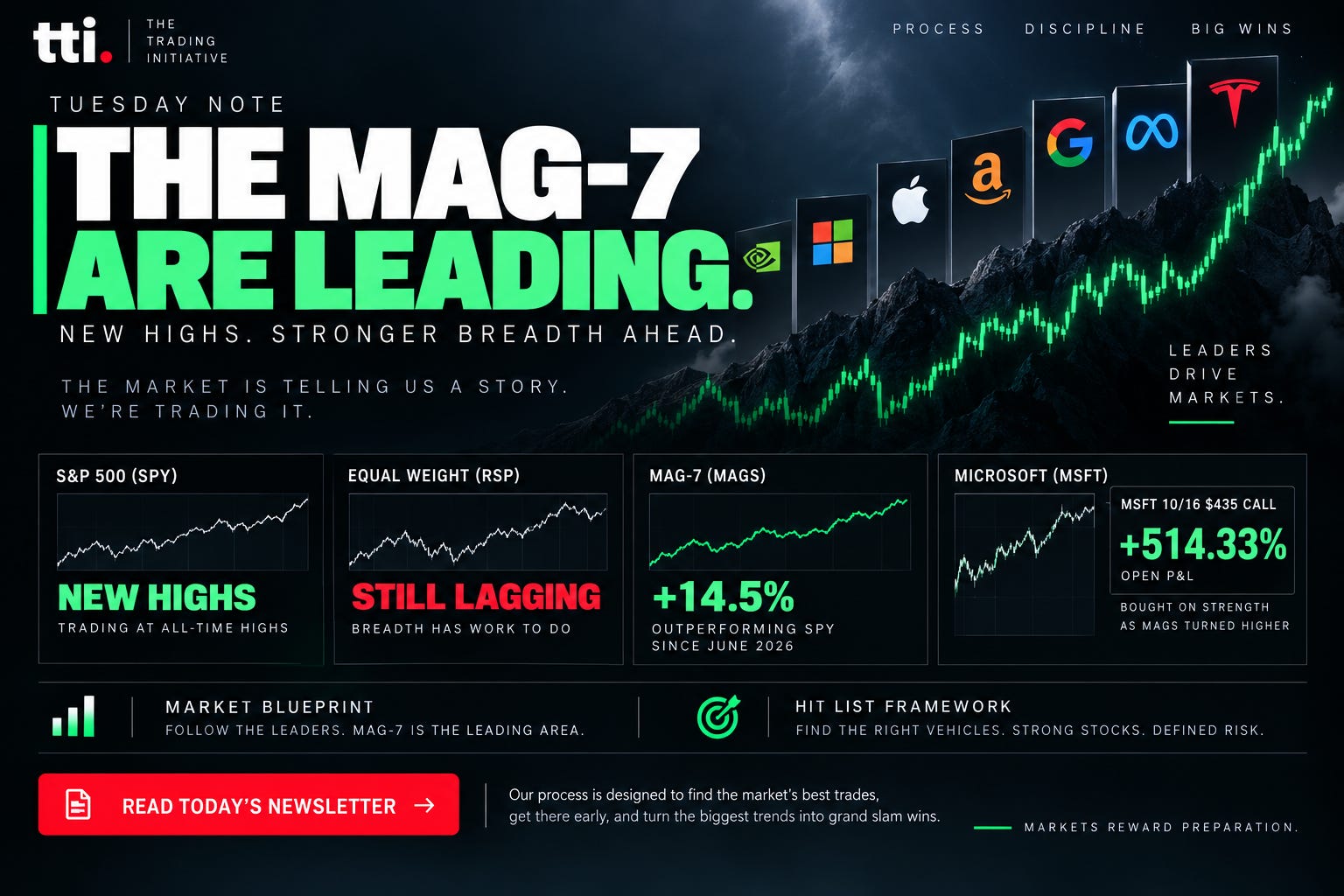
The S&P 500 is back at record highs
The Mag 7 are breaking out
Leadership is already giving us trades
The S&P 500 is back at all-time highs.
That should probably be the first thing we acknowledge before looking for reasons to be worried about it.
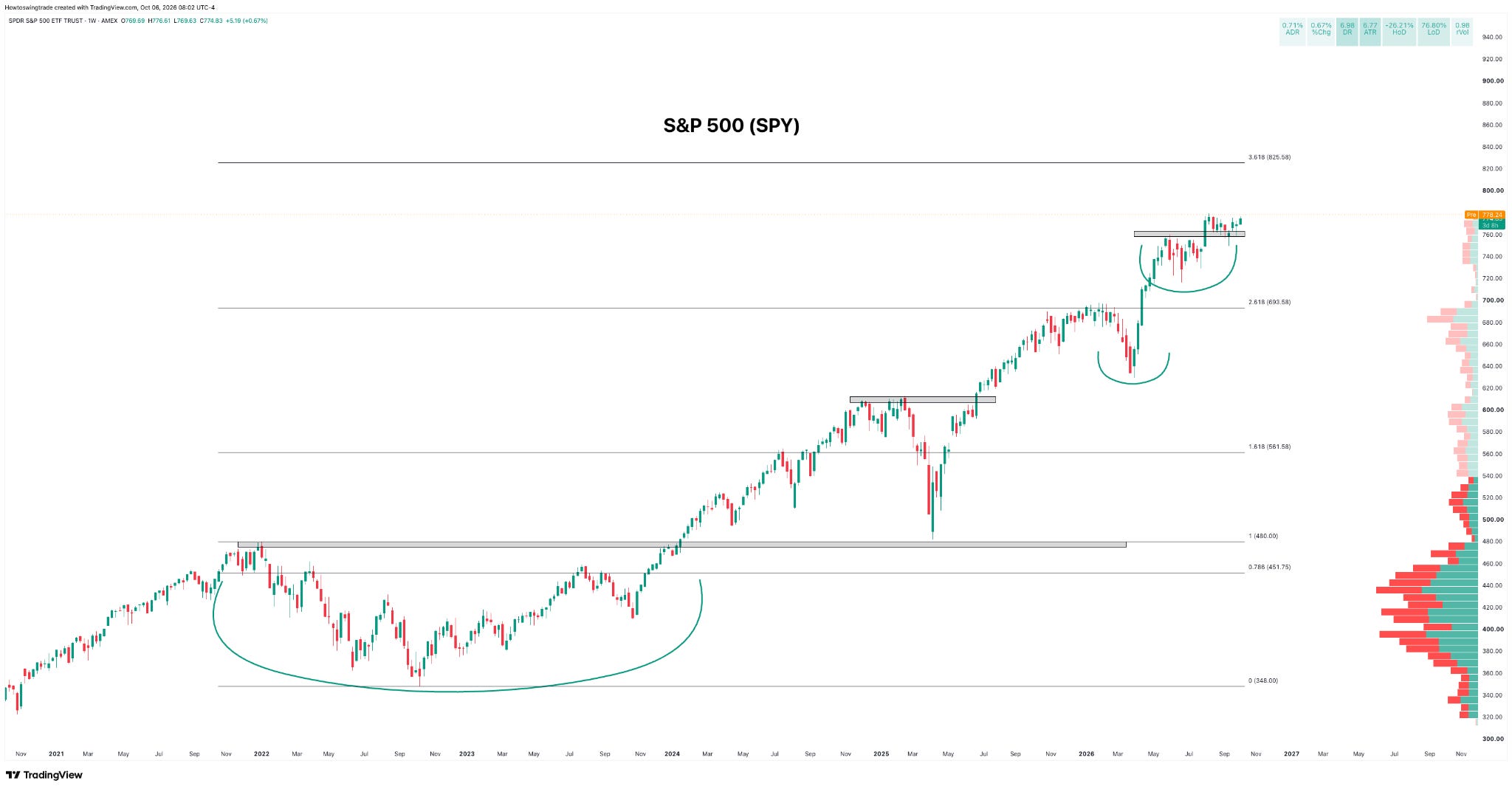
Yes, breadth is still imperfect. The equal-weight S&P 500 is below its recent highs, which means the average stock has not kept pace with the cap-weighted index.
But somebody has to be pushing the index higher.
Right now.. the answer is becoming increasingly obvious:
The Magnificent Seven are leading again.
And that’s exactly what we said we wanted to see heading into the end of the year.
Market leading stocks, brutal truths and no-BS straight to your inbox by 9am.
Bad breadth doesn’t mean a bad market
Last week, in Breadth Is So Bad It Might Be Good, we looked at the strange setup underneath the indexes.
Short-term participation was washed out, yet QQQ was pressing against its highs, technology was already breaking out and equal-weight technology was confirming the move.
My conclusion was not that breadth didn’t matter.
It was that weak breadth and strong indexes can coexist when leadership becomes concentrated in the biggest stocks.
That is exactly what we’re seeing.
SPY is making new highs.
RSP is not.
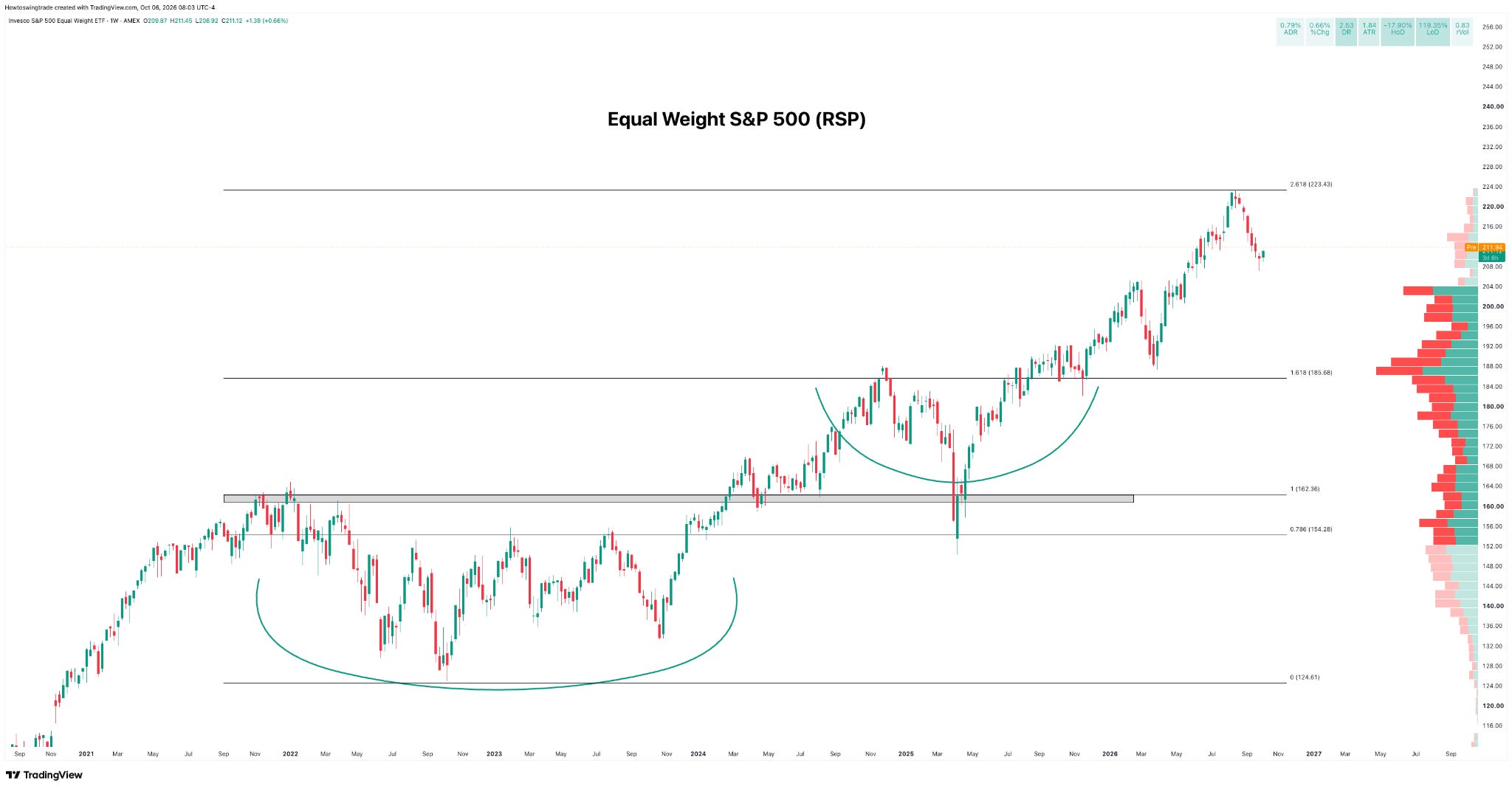
The market-cap-weighted index is outperforming the average stock because the largest companies are carrying more of the load.
And those companies are not hiding.
The Mag 7 just broke out
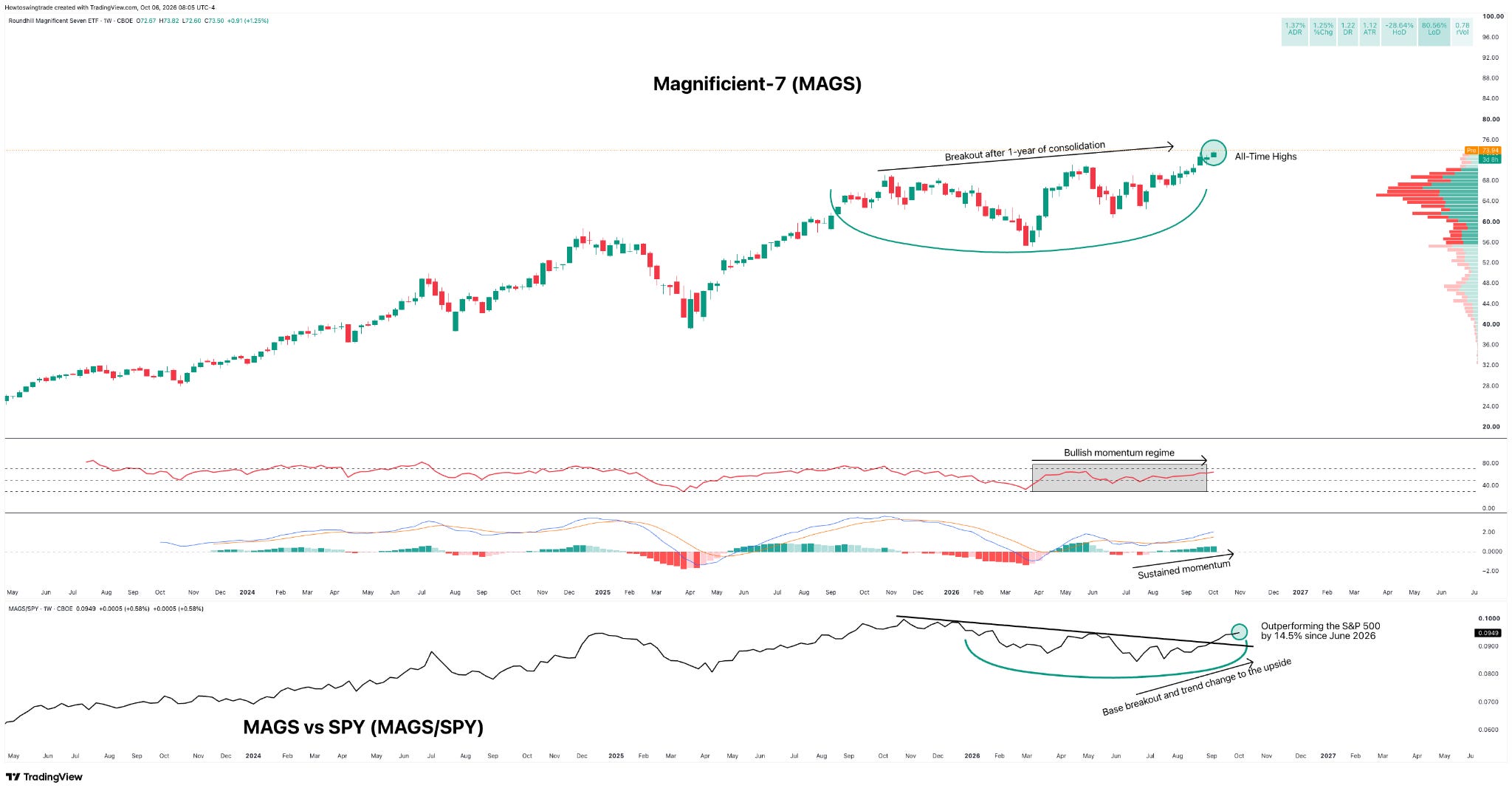
MAGS has spent roughly a year consolidating.
That consolidation is now resolving higher.
The group is breaking into absolute all-time highs, momentum remains bullish, and the relative-strength chart is doing the same thing.
Since June, MAGS has outperformed the S&P 500 by more than 14.5%.
That last part is important.
A stock or group moving higher is good.
A stock or group moving higher faster than the market is leadership.
And when both the absolute chart and the relative chart are breaking out together, I pay attention.
Back in September, we wrote that the Mag 7 were beginning to reassert themselves after spending much of the year resting while other parts of the market broadened out.
My view was that the giants were waking back up and could help drive the next leg higher through year-end.
That thesis is working.
We don’t need to rewrite it because breadth isn’t perfect.
We need to recognize what the market is actually rewarding.
This is what the Market Blueprint is for
One of the biggest mistakes traders make is starting with a random stock.
I want to start higher up the food chain.
The Market Blueprint asks:
What is the market doing?
Where is leadership?
Which sectors and groups are attracting capital?
Where is relative strength improving?
Right now, the broad market is in an uptrend and trading at record highs.
Technology has been a leading sector.
And inside that leadership, the Mag 7 are breaking out both absolutely and relative to the S&P 500.
That gives us the bigger-picture idea.
Then the Hit List does the opposite.
It works from the individual opportunity up.
Which stock gives us the cleanest structure?
Where is the defined risk?
Where can we get asymmetry rather than simply chasing something because it’s strong?
The Blueprint tells us where to hunt.
The Hit List tells us what vehicle might actually make us money.
Microsoft is a good example.
The bigger idea gave us the trade
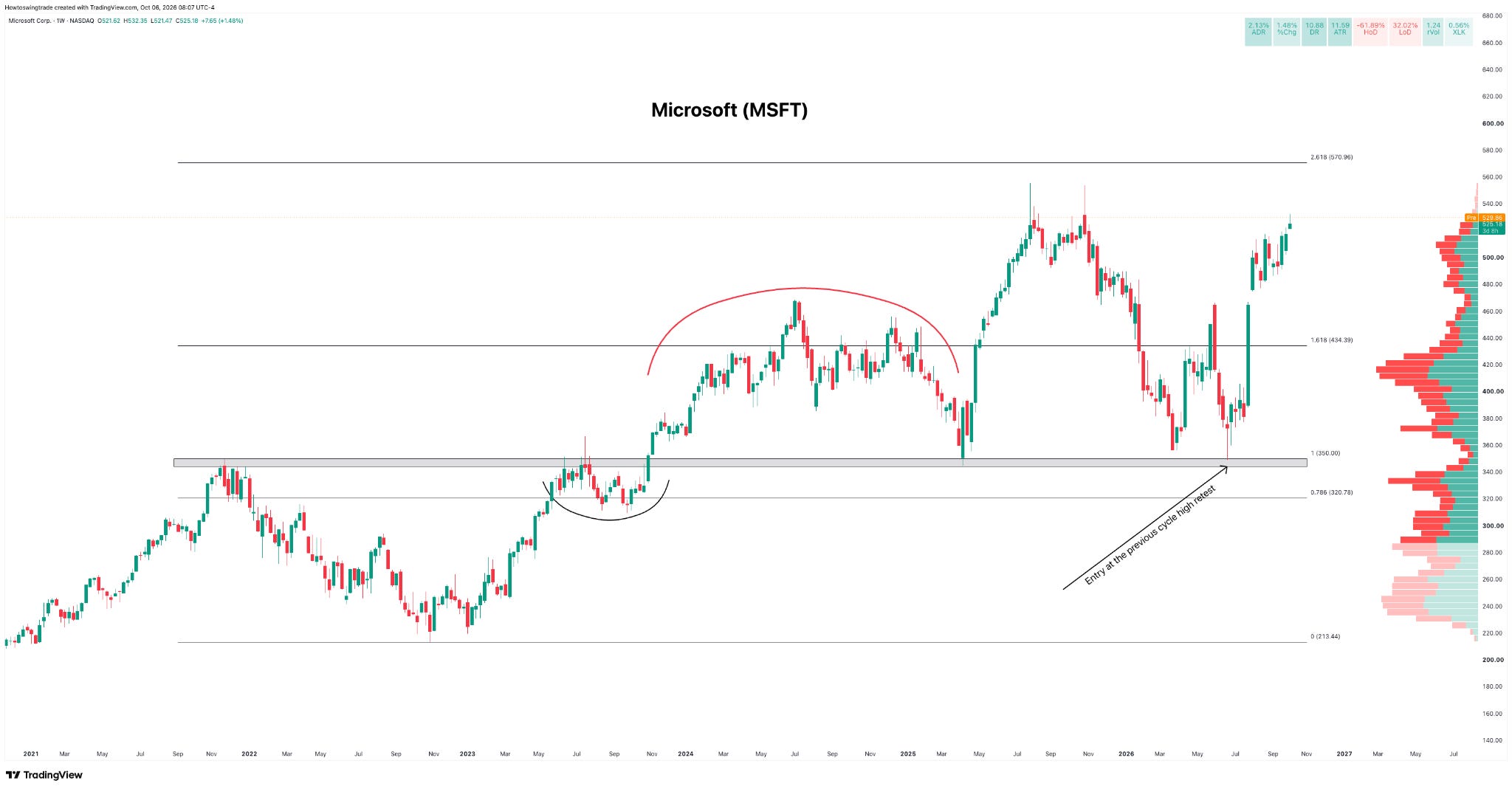
As strength rotated back toward the Mag 7, Microsoft gave us something I could actually work with.
The stock pulled back into the prior cycle-high area and offered a setup where the upside opportunity was substantially larger than the amount of risk I needed to take if the thesis was wrong.
That is the difference between:
“The Mag 7 look bullish.”
and:
“Here is a trade I can define.”
We bought the MSFT October 16 $435 calls.
And we’re up over 500% in the trade.
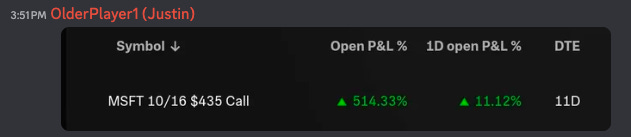
That doesn’t mean the next trade will make 500%.
It doesn’t mean every Mag 7 stock is automatically a buy at any price.
It means the process did what we designed it to do.
We identified leadership at the group level.
Then we found an individual security giving us a high-risk/reward way to express the larger thesis.
Market Blueprint → Hit List → trade.
That’s how we operate.
It’s a bull market. Act like it.
There will always be something to worry about.
Breadth. Rates. Politics. Valuations. The Fed. The next headline.
But eventually we have to trade the market we actually have.
And the market we actually have is making all-time highs.
Its largest companies are breaking out.
The leading group is outperforming.
And our positions aligned with that leadership are working.
That doesn’t mean we abandon risk management or chase every green candle.
It means we stop treating strength like something we need to apologize for.
We are in a ripping bull market.
It is time to act like it.
Follow the money. Find the leaders. Wait for the right vehicle. Define the risk.
And when the market gives you a great trend, give it enough room to matter.
Because if breadth starts catching up while the Mag 7 keep leading?
The next leg could be a lot broader than the last one.
Follow the money,
Hamilton
Founder, The Trading Initiative
P.S. — This is exactly how we work inside The Trading Initiative. The Market Blueprint identifies where leadership is developing. The Hit List helps us turn those bigger-picture ideas into individual trades with defined risk. Members get the Trade Desk, research, trade alerts, live coaching and the actual decisions we’re making as these moves develop. If you want to trade the bull market with us instead of watching it happen from the sidelines, join TTI.
If you’ve read this far.. click the link or button above for 25% off your first 12 months inside of TTI. I guarantee you will learn how this all works.