



Prepared for you by Randy Dunham
September 29, 2026
THE PRINT
The U.S. 10-year Treasury yield hits 5.23% — highest since 2007.
THE CHART(S) / DATA
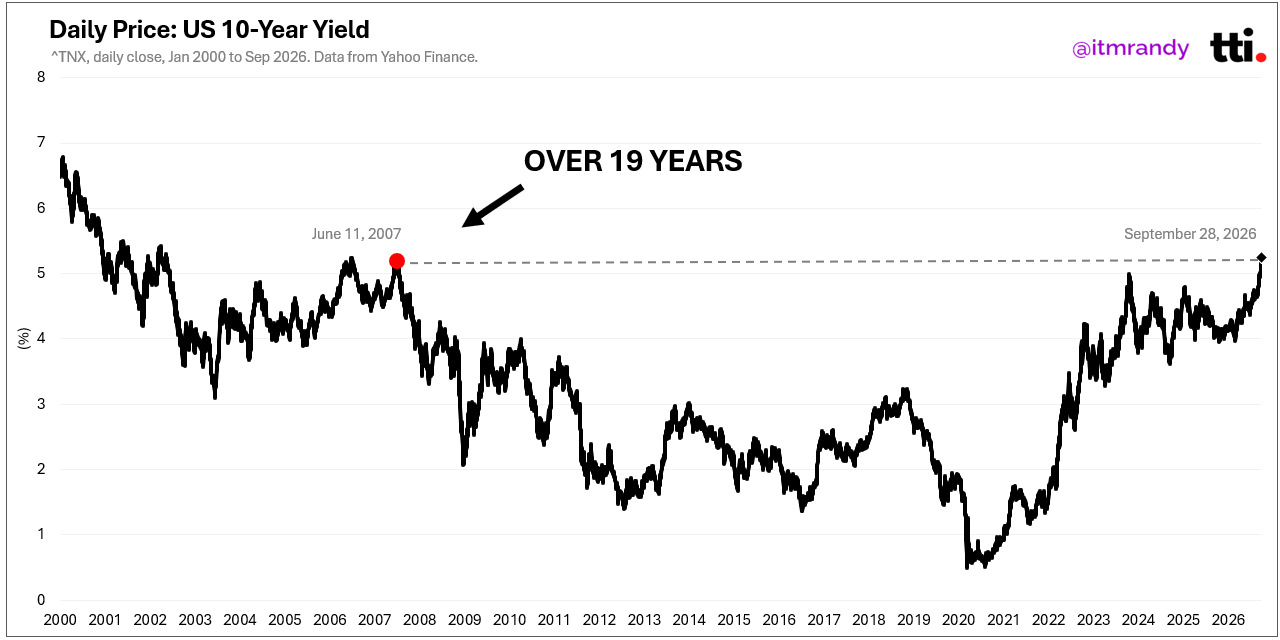
The 10-year Treasury yield is one of the most important numbers in global finance. During the September 16 Fed press conference, Chair Warsh called the 10-year Treasury the “most important asset anywhere in the world.”
The 10-year yield serves as a benchmark for borrowing costs and asset valuations across the financial system.
1/ Borrowing costs.
→ The 10-year serves as a benchmark for long-term interest rates, including mortgage rates.
→ When the 10-year rises, borrowing money to buy a home often becomes more expensive.
2/ Asset valuations.
→ The 10-year also serves as a reference point for valuing stocks, bonds, and other financial assets. Investors use interest rates to discount future cash flows.
→ When rates rise, those future cash flows are worth less today, all else equal.
Here’s something interesting: The 10-year yield has been climbing alongside the probability of a Fed rate hike at the October 27–28 meeting.
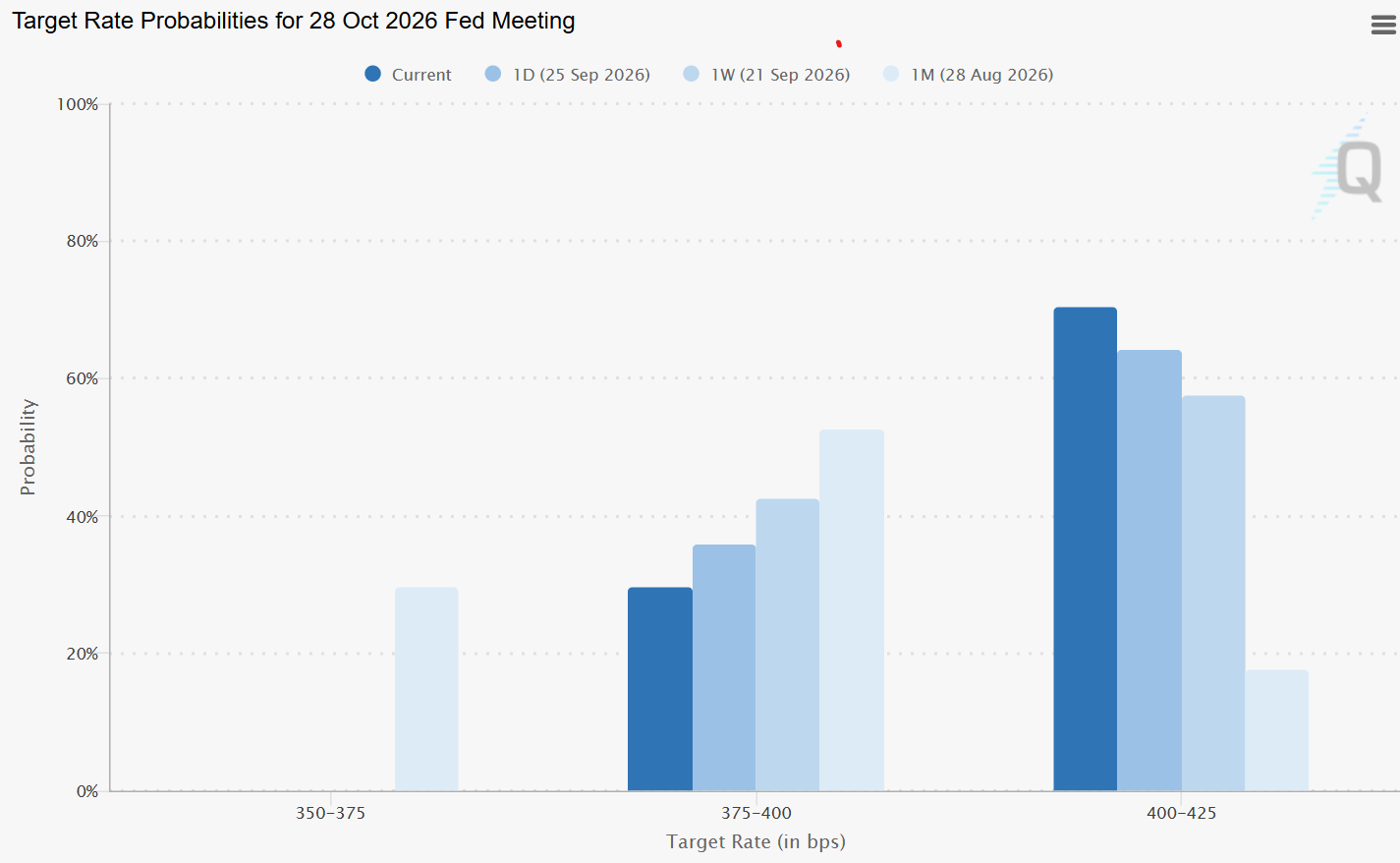
Just a week ago, the odds of a rate hike were 58%. Today, they’re 70%.
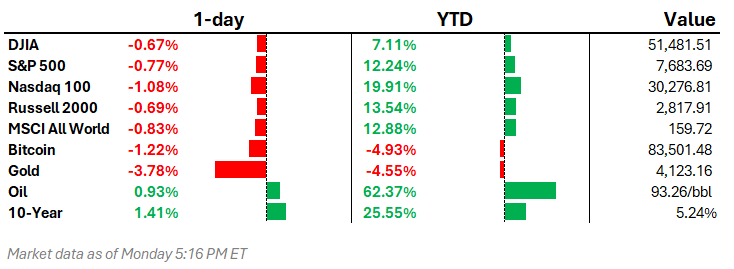
Over the same period, the 10-year yield has risen 5.95%.
The two don't always move together, but they have been moving higher in tandem recently.
Takeaway: The 10-year is worth watching because it influences borrowing costs, asset valuations, and expectations for Fed policy. Its recent rise has coincided with higher rate-hike probabilities, but whether that translates into further pressure on stocks is another question.
THE TAPE
THE HIGHS AND LOWS
SPREAD THE WORD!
CHECK OUT OUR TWITTER AND YOUTUBE TOO!
Material, data, and information in this newsletter are for informational purposes only. This is not tax, legal, or investment advice, and does not constitute a suggestion, solicitation, or offer to buy or sell securities. TTI believes this information is reliable but does not warrant its completeness or accuracy.
Hike odds moving from 58% to 70% while the 10-year sits at 5.23% is correlation, not a valuation rule. Discount rates matter, but treating FedWatch as a mechanical floor under equities skips the part where earnings and buybacks still have to clear a higher hurdle.