



Prepared for you by Randy Dunham
October 7, 2026
THE PRINT
Rate-sensitive groups are feeling the pressure from higher yields.
THE CHART(S) / DATA
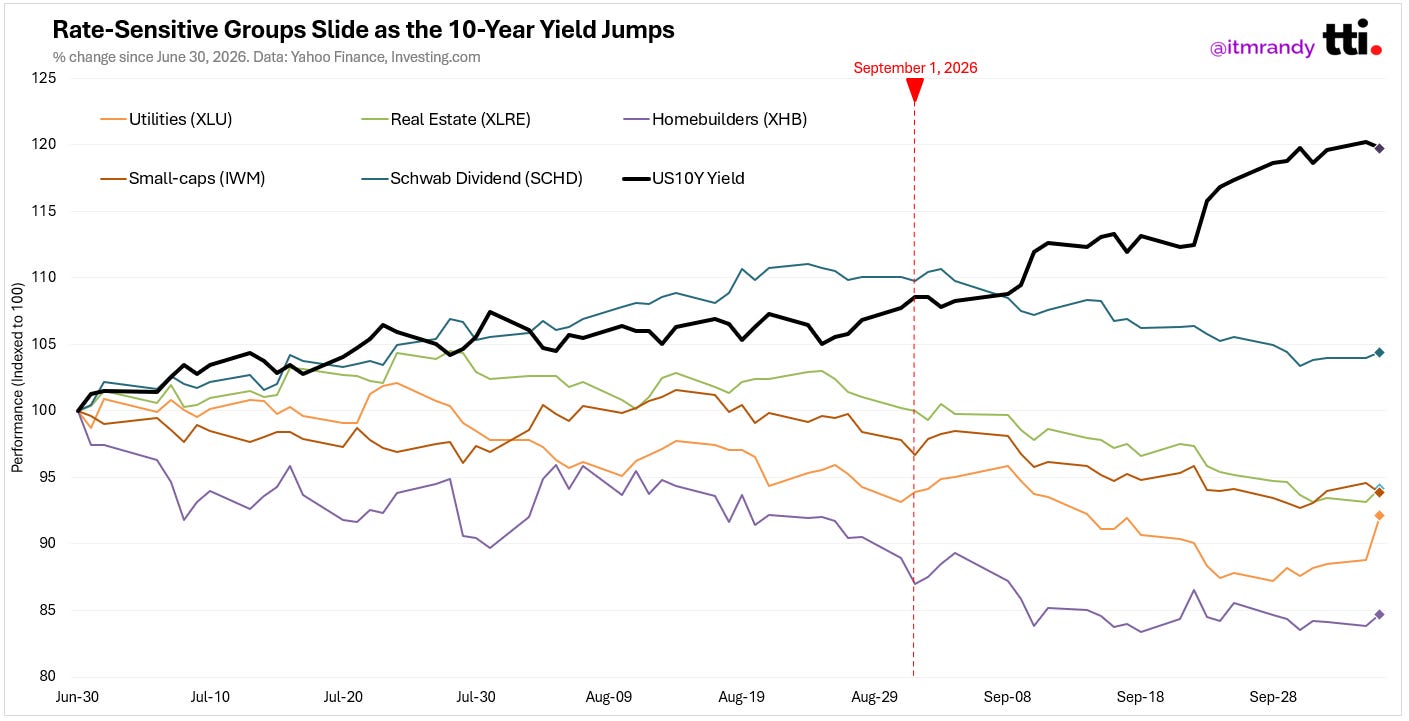
The US 10-Year Yield has surged nearly 20% since July. More than half of that move came in September alone.
This sharp rise in yields is a problem for rate-sensitive groups in the market. These include utilities, real estate, homebuilders, small-caps, and dividend ETFs.
Yields impact these areas for two main reasons:
Competition with bonds for income. Some stocks offer attractive dividends, which can make them appealing to investors who want income over the long run. Price gains are a bonus. These investors are mainly looking for income from dividends. But a safe bond that pays 5% makes a utility or REIT paying 3% look less attractive.
Debt borrowing. The US 10Y is a benchmark that lenders use as a starting point. So when the 10Y rises, many borrowing costs rise with it. Industries with high borrowing costs, such as homebuilders, are hit as higher rates eat into profits.
This makes the next chart even more interesting:
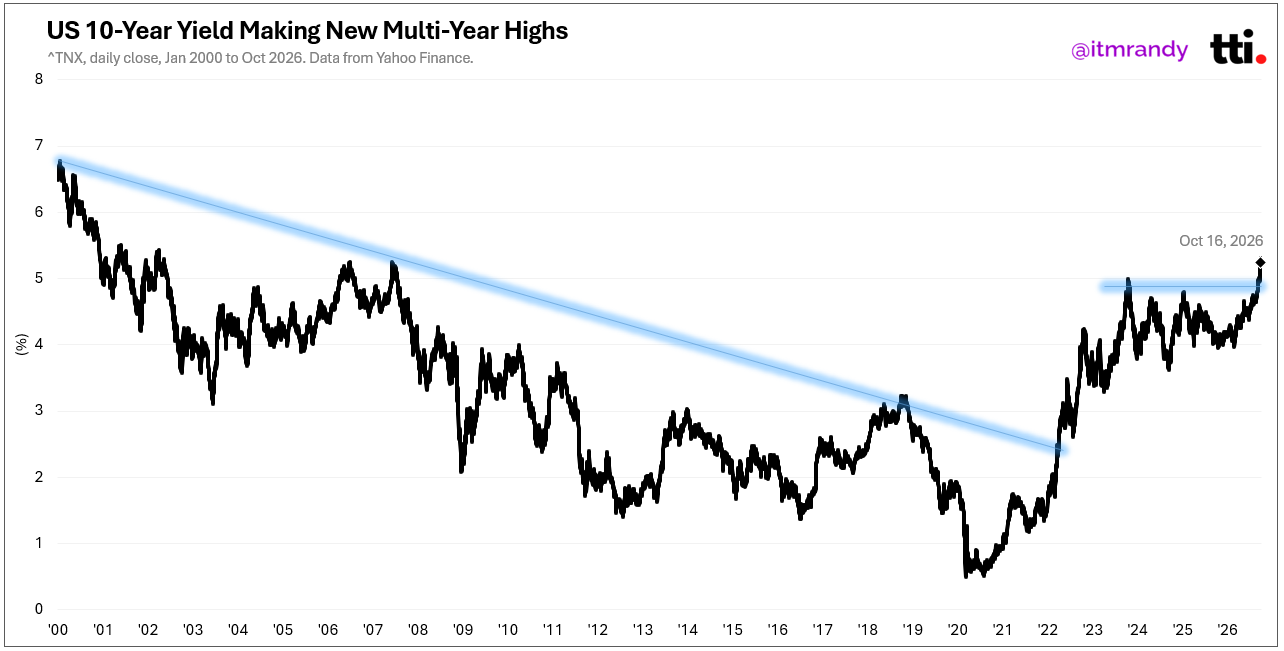
With the US 10-Year yield possibly entering a new secular bull market, how do these groups adjust to a higher-rate world?
Especially since the market has been used to a secular bear market in yields for years.
This is the bigger question and one that many investors, including me, are still wondering.
Takeaway: The recent rise in yields is already putting pressure on rate-sensitive groups. But the bigger question is what happens if the 10-Year yield is entering a new secular bull market. Will these groups be able to adjust, or will higher yields remain a lasting headwind? Your guess is as good as mine.
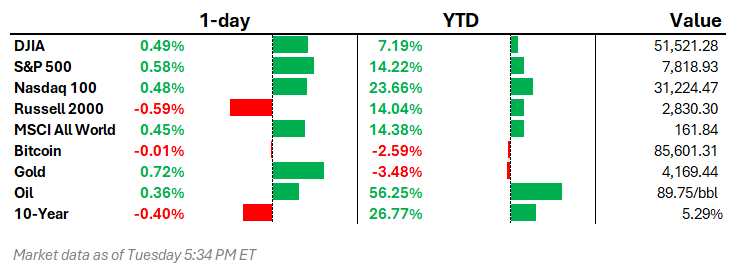
THE TAPE
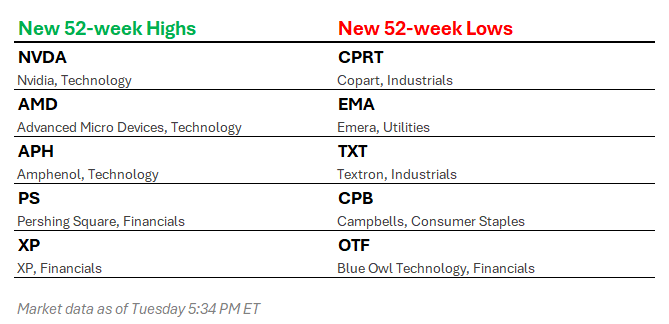
THE HIGHS AND LOWS
SPREAD THE WORD!
CHECK OUT OUR TWITTER AND YOUTUBE TOO!
Material, data, and information in this newsletter are for informational purposes only. This is not tax, legal, or investment advice, and does not constitute a suggestion, solicitation, or offer to buy or sell securities. TTI believes this information is reliable but does not warrant its completeness or accuracy.