



Prepared for you by Randy Dunham
October 2, 2026
THE PRINT
Bond volatility is elevated relative to equity volatility. But despite MOVE and VIX often moving together, MOVE has shown little reliable ability to predict where VIX goes next.
THE CHART(S) / DATA
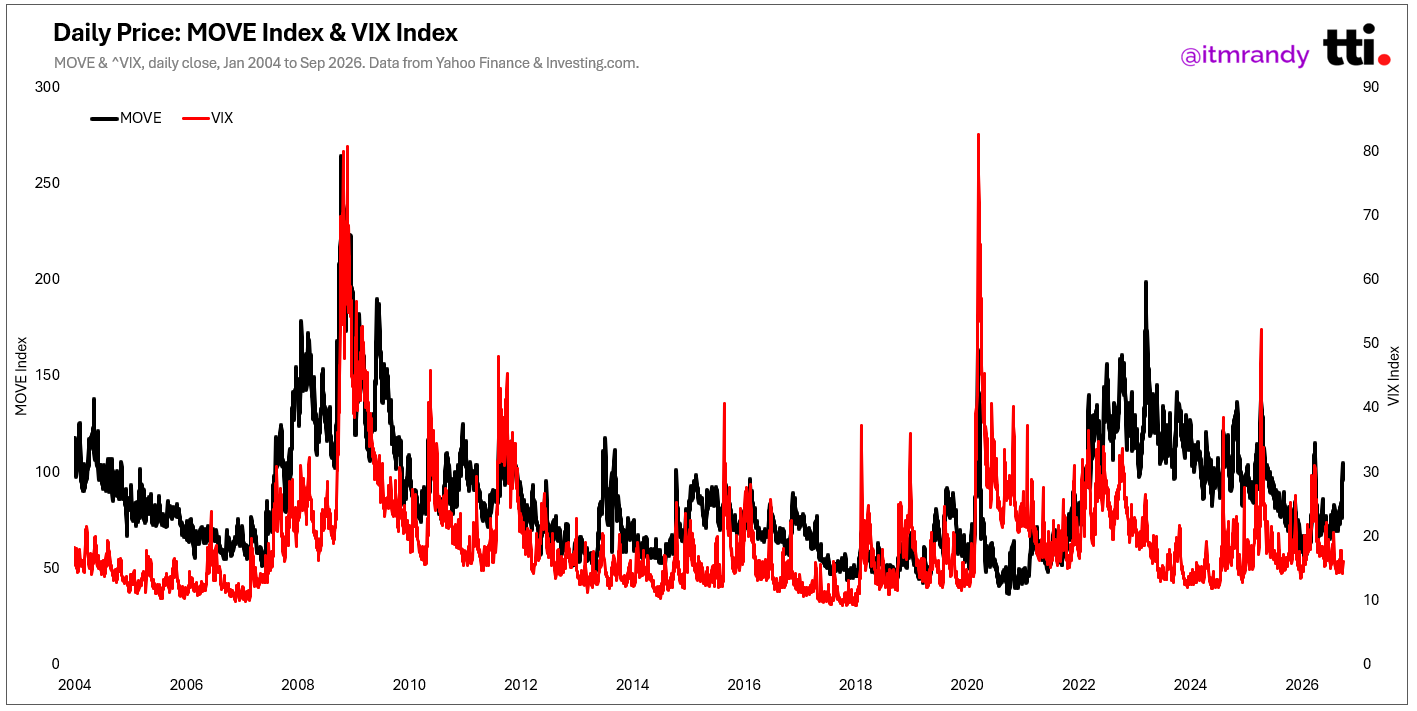
The MOVE Index measures bond market volatility, while the VIX measures expected volatility in the S&P 500.
Both respond to larger macro forces, including interest rates, inflation, and the economy. So it's not surprising to see them move together.
The 52-week rolling correlation below shows this relationship:
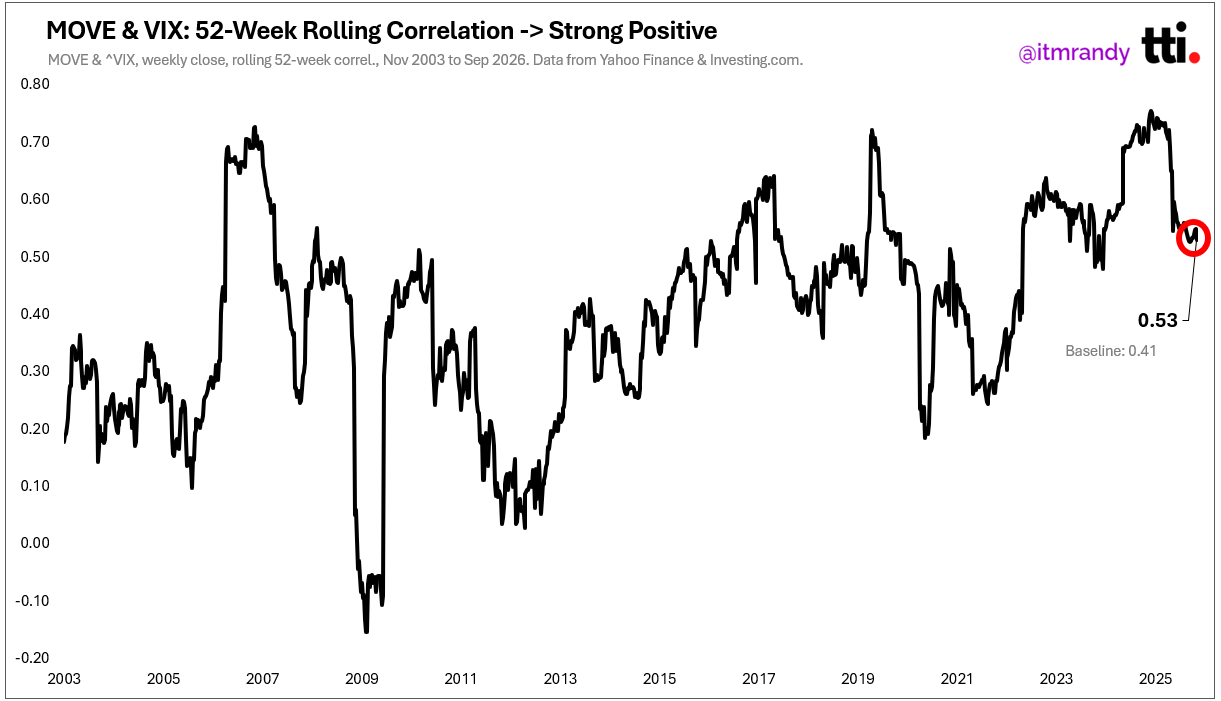
However, MOVE has moved higher while VIX remains subdued. Does that tell us anything about where VIX is headed?
Does MOVE actually tell us where VIX is heading?
To test this, I looked at the 52-week rolling correlation between MOVE and VIX, shifting VIX forward by one and two weeks.
In other words, does this week's MOVE reading tell us anything about VIX next week or the week after?
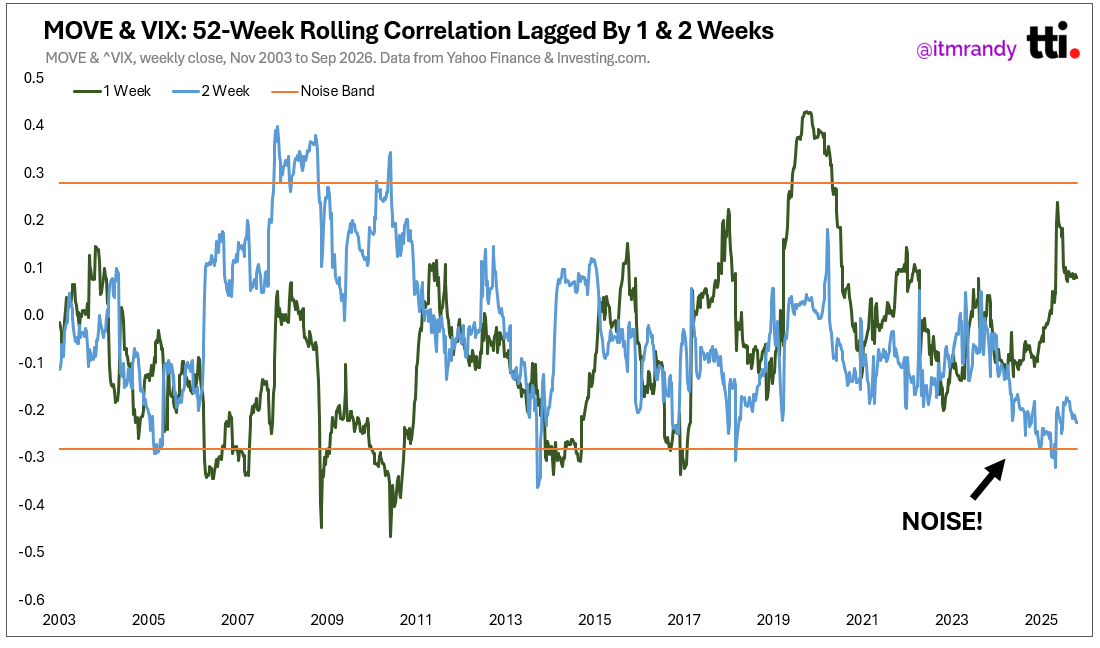
The relationship is muddy. The latest readings fall within the noise bands (orange lines), which show the range where correlations can occur by chance.
In other words, the data doesn't show a reliable relationship between this week's MOVE and where VIX goes over the next couple of weeks.
Takeaway: MOVE and VIX often move together, but that doesn't mean one leads the other. Bond volatility may tell us something about the broader market environment, but its ability to predict short-term moves in VIX is limited.
THE TAPE
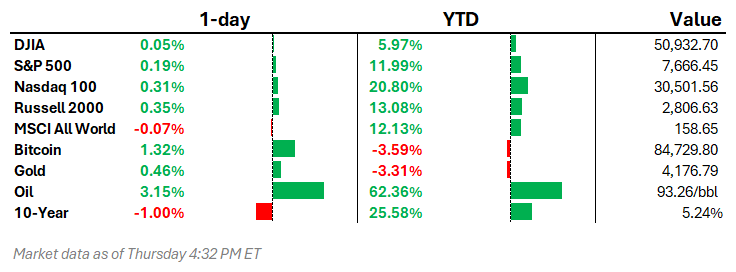
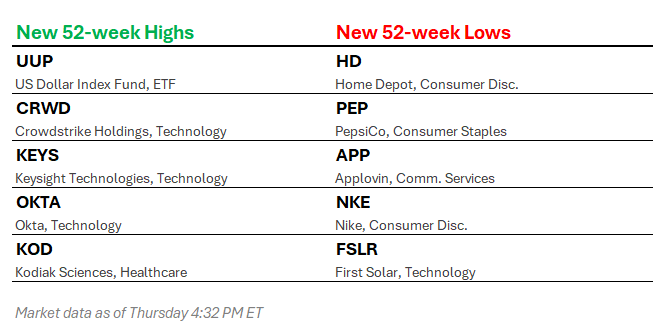
THE HIGHS AND LOWS
SPREAD THE WORD!
CHECK OUT OUR TWITTER AND YOUTUBE TOO!
Material, data, and information in this newsletter are for informational purposes only. This is not tax, legal, or investment advice, and does not constitute a suggestion, solicitation, or offer to buy or sell securities. TTI believes this information is reliable but does not warrant its completeness or accuracy.
Good morning Randy
Thanks